ServicesWindows
Clean Windows, Screens and Tracks in Cohoes
We clean exterior and interior glass, then do the parts most crews skip: screens, tracks, sills and the frame edges where grime collects. You get clear windows with no streaks or drip lines, and sashes that open smoothly again.
Clean glass depends on the edges
Most streaks you see after a cleaning come from the edges. Dirty water trapped in the gasket, a wet frame left to drip, or a screen that puts its dust back on the glass the first time the wind blows. We work the edges first and the middle last, so the result holds up for more than a few days.
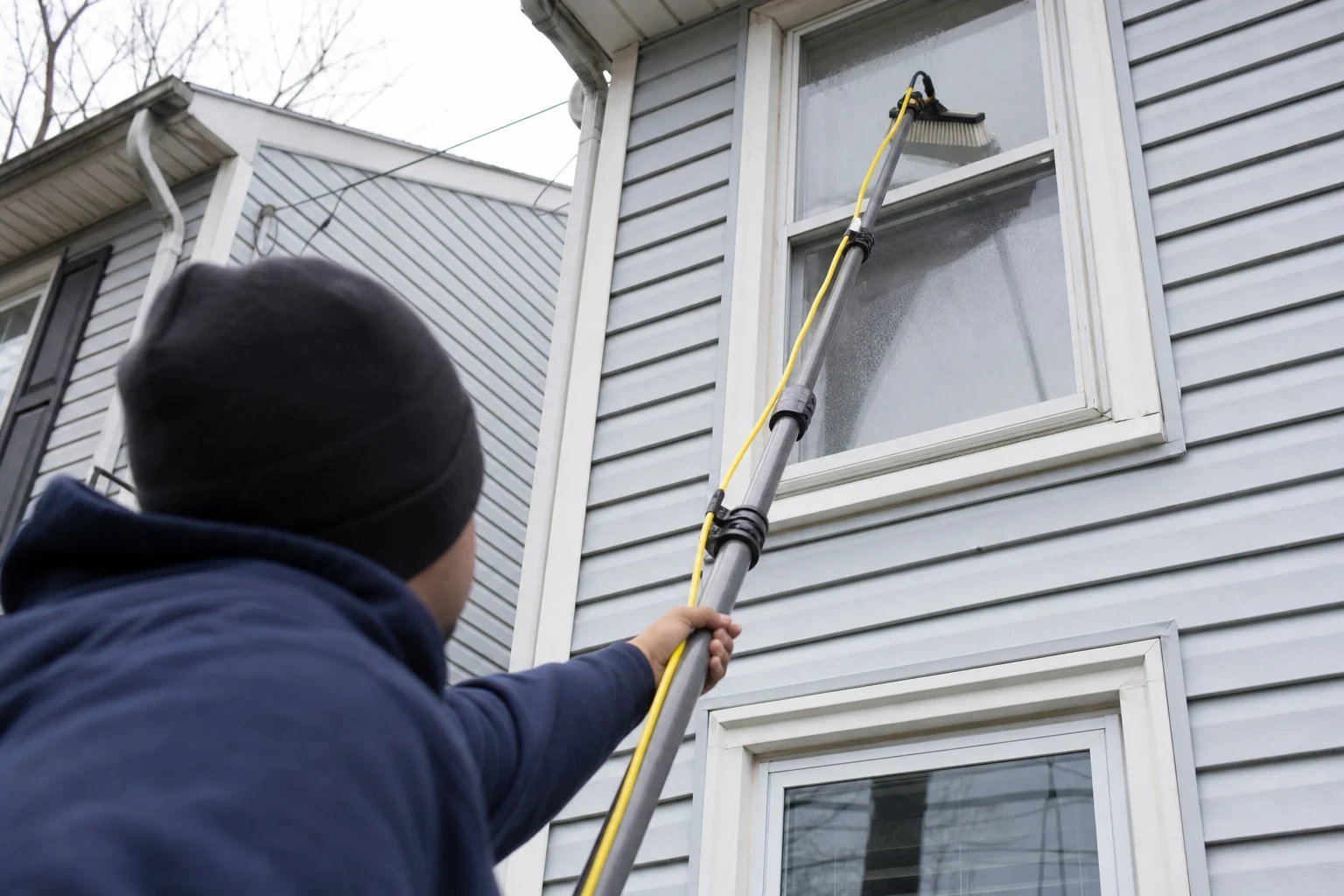
On ground-floor windows we use a scrubber and squeegee, then detail the corners with a dry microfiber. For second-story glass we use a water-fed pole with purified water that has the dissolved minerals filtered out, so it dries without spots. Older double-hung windows, common in houses around Cohoes, get extra care at the meeting rail where the two sashes overlap.
What a visit covers
Exterior glass
Every pane is scrubbed, squeegeed and edge-dried. Hard water spots from sprinklers get a closer look so we can tell you whether they will lift or have etched the glass.
Interior glass on request
We lay drop cloths under each window, wear shoe covers and wipe the sill when we finish. Tilt-in sashes get cleaned on both faces.
Screens
Screens come out, get brushed and rinsed, and go back in once they are dry. A dirty screen is the most common reason freshly cleaned glass turns hazy within a week.
Tracks and sills
We vacuum the tracks, then wipe out the dead insects, pollen and grit that make sashes stick. Weep holes get cleared so rainwater drains out instead of pooling.
Frames and trim
Frames and the trim right around the glass are wiped down, which keeps dirty runoff from streaking the pane at the next rain.
Signs your windows are due
Haze in low sun
If the glass looks fine at noon but turns cloudy when the sun is low, a film has built up. Pollen, road dust and exhaust bond to the surface and rain alone will not remove them.
White spots that stay put
Mineral deposits from hard water get harder to remove with each wet and dry cycle. Caught early, they come off with a cleaner and a pad.
Sashes that stick or grind
Grit in the track wears the balance hardware and the weatherstripping. A cleaned track is cheap protection for the window itself.
Gray streaks below the frame
Dirty runoff from the frame and sill is leaving tracks down the glass, so the edges and the pane need cleaning together.
Screens you can barely see through
Clogged mesh cuts light and airflow, and it rubs dirt back onto the glass every time you open the window.
How the day runs
- 1
Walk-around first
We check each window for cracked seals, loose glazing, failed paint and existing scratches, and point out anything we find before we start. That way nothing gets blamed on the cleaning that was already there.
- 2
Screens out, tracks cleaned
Screens come off and get washed while we vacuum and wipe the tracks. Clearing the tracks first keeps that grit off the clean glass.
- 3
Glass, then edges
Each pane is scrubbed and squeegeed, then the corners and gasket lines are detailed by hand. Upper floors are done from the ground with the water-fed pole where possible, which means fewer ladders against your siding.
- 4
Final check and cleanup
We reinstall the dry screens, look at each window against the light, and redo any spots we find. Drop cloths, buckets and hoses go back on the truck before we leave.
What moves the price
We price the job after we see the house or talk it through with you by phone. Your quote lists the windows, screens and add-ons separately so you can see where the cost comes from. Here is what changes it.
- Number and type of panes
- Divided-lite and grille windows take far longer than a single large pane. Storm windows add a second layer of glass to clean.
- Height and access
- Third-story glass, windows over a porch roof, or windows behind thick plantings take more setup time.
- Inside, outside or both
- Interior work adds drop cloths, furniture moves and careful handling of tilt-in sashes.
- Buildup on the glass
- A first cleaning after several years, heavy mineral spotting or paint overspray takes more time than routine upkeep.
Questions about clean windows
Something not covered here? (518) 714-1045
How often should my windows be cleaned?
Most homes do well with a cleaning in spring and again in fall. Spring removes the road film and salt residue from winter, and fall clears the pollen and insect debris from summer. Houses near busy roads or with sprinklers hitting the glass may need it more often.
Can you remove hard water spots?
Usually, if they have not etched the glass. We test a small area first and tell you what to expect before doing the whole window. Etched glass can be improved, but not always made perfect, and we will say so up front.
Will the water-fed pole leave spots?
No. The water runs through a filter that removes the dissolved minerals, and minerals are what leave spots behind. With nothing left in the water, it dries clear without a squeegee.
What if something gets damaged while you work?
We are licensed and insured, and the walk-around before we start records any existing scratches or cracked seals. We also keep ladder use to a minimum and pad ladder feet and tops wherever they touch the house.
I have permanent lights along my roofline. Will cleaning affect them?
We work around the track and leave it alone. We are an authorized Gemstone Lights installer, so we know how those channels and connections are mounted and where a pole or ladder should not rest.

Ready for clear glass again
Tell us how many windows you have and which ones are hard to reach. We will go over what is included and give you a free quote by phone.