ServicesRoofline Mounting Prep
Roofline Mounting Prep for Permanent Lighting in Cohoes
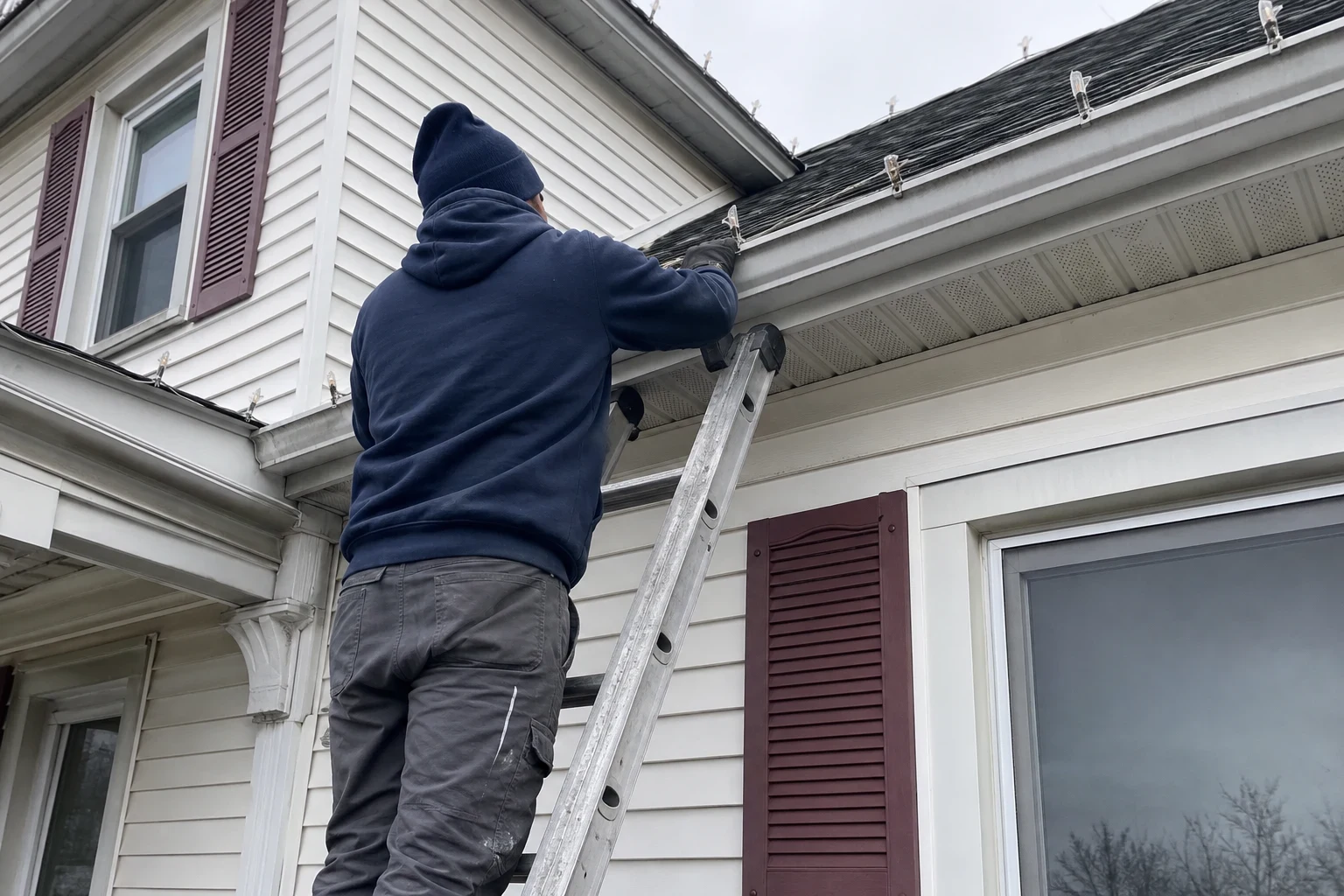
Permanent lighting is only as solid as the surface it mounts to. Before any track goes up, we inspect the fascia, gutter lip and soffit edge, strip old clip residue and chalky oxidation, and fix what would loosen a fastener. You get a mount that holds through winter.
What mounting prep covers
For us, mounting prep is one specific job: getting the parts of your home exterior ready where permanent lighting will attach. It is the first stage of every permanent exterior lighting installation we do. We work the narrow band along the roofline where track, screws and sealant actually touch the house, and nothing beyond it.
Here is why it matters. Aluminum fascia wrap and painted trim slowly build up a film of oxidation, pollen and mildew. Screws still bite, but the back of the track and the sealant around each fastener end up sitting on that film instead of on the trim. Water works in behind it, freezes, expands, and after a few winters the run starts to sag or a seal lets go. Getting down to sound material is the least expensive way to prevent that.
We are licensed and insured. As an authorized Gemstone Lights installer, we follow the manufacturer's mounting guidance, and that guidance assumes a clean, dry and solid surface under every section of track.
What the prep includes
Preparing the mounting line
We wipe down the fascia or trim edge with a mild cleaner and a non-abrasive pad, rinse it, and let it dry fully. The goal is bare paint or bare aluminum exactly where the track will sit.
Removing old hardware and residue
Plastic holiday clips, adhesive hooks, cup hooks, staples and bent nails all come off. We take the leftover adhesive down to the paint and fill old holes with exterior sealant so water cannot wick into the wood behind the wrap.
Checking the gutter edge
Many runs mount along the front lip of the gutter. We wipe that lip and check that the hangers are tight and the gutter is not pulling away from the fascia, because a light run can never be straighter than what it is fastened to.
Probing for soft wood
Aluminum wrap can hide a rotted fascia board. We press along the line and probe any spot that flexes, then mark it and show you photos before a single fastener goes in.
Moisture and temperature check
Sealant needs a dry surface and a minimum temperature to cure and grip. We confirm both on the day so nothing gets sealed over damp trim.
Signs your roofline needs prep first
- Old clips and hook marks
- Rows of clips or sticky adhesive spots from seasonal lights leave an uneven surface. Track mounted over them rocks and loosens.
- Chalky aluminum
- Rub the fascia with a finger. If it comes away white, the finish is oxidizing, and sealant will grip the chalk instead of the metal.
- Green or black film
- Shaded, north-facing trim grows mildew and algae. That layer stays damp and lets fasteners corrode faster.
- Peeling paint or soft spots
- Flaking paint behind the gutter or wood that gives under thumb pressure means the board needs attention before it carries a light run.
- A past run that came loose
- If earlier lights sagged or pulled out, the surface underneath is usually the reason, and it will do the same thing again unless it is addressed.
How the prep day runs
- 1
A call and a look
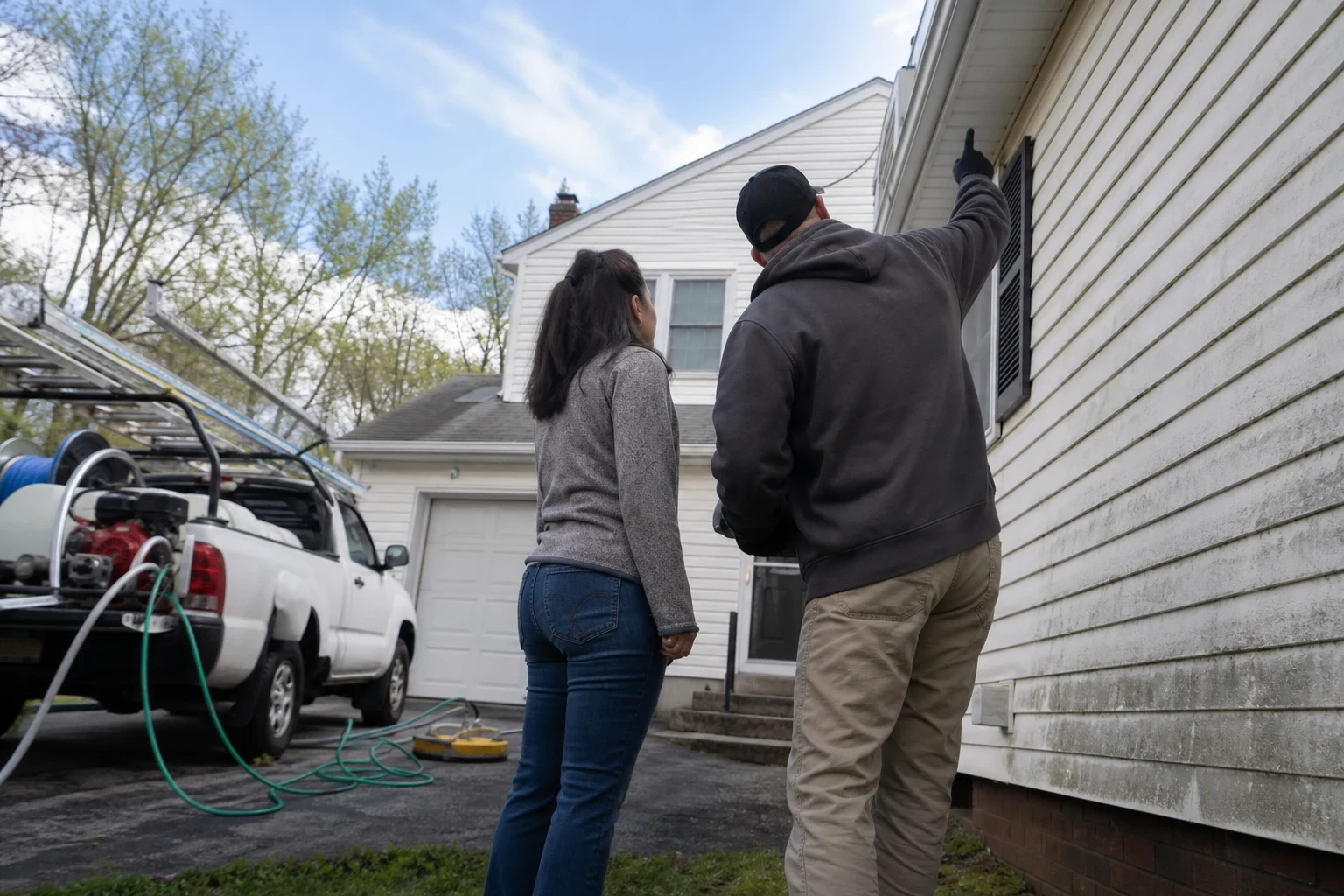
You call, we ask about the house and where you want the lights, then we walk the roofline in person and give you a free quote.
- 2
Inspect and mark
We go along the line from a ladder, pull old hardware, probe the trim and photograph anything that needs repair. You see those photos before we continue.
- 3
Prep, strip and seal
We wipe down the mounting band, remove adhesive residue and seal old fastener holes. Drop cloths go over beds and walkways below so debris and rinse water stay off them.
- 4
Dry, verify, mount
Once the surface is dry and the sealant has set, we check the line one more time and start the permanent lighting installation. Everything we removed leaves with us.
What moves the price
Prep is usually a modest part of a lighting job, but it varies with the house. We price it line by line in your quote so you can see exactly what the roofline needs and why. These are the things that change it most.
- Length of the run
- More linear feet of roofline means more surface to prepare, inspect and seal.
- Old hardware and residue
- A roofline covered in years of clips and adhesive hooks takes longer than a bare one.
- Height and access
- Second-story eaves, steep pitches and dense plantings below slow the work and can change the ladder setup.
- Condition of the trim
- Sealing a few holes is quick. A soft fascia board is a bigger item, and we show it to you with photos before any decision.
Mounting prep questions
- Do you work on the whole outside of the house?
- No. We prepare only the narrow band along the roofline where track and fasteners attach. The rest of the siding is left as it is. That keeps the prep focused on what decides how long the lights last.
- Why not just mount the track over what is there?
- Because the track would be stuck to dirt and oxidation, not to your trim. Moisture gets behind that layer, freezes and loosens the seal around each screw. It might look fine for a season, then start to sag.
- Will the prep damage my paint or aluminum?
- We use a mild cleaner and non-abrasive pads, never high pressure on the trim. Paint that is already failing may flake off during prep, and if that happens we point it out before mounting.
- Can you prep in cold weather?
- Often, yes. Freeze-thaw cycles around the Capital Region are hard on trim, so we only seal when the surface is dry and warm enough for the sealant to cure. If a day is too cold or wet, we reschedule rather than seal over damp wood.
- What happens if you find rot behind the fascia?
- We stop, mark the spot and show you photos. You decide how to handle the repair before any lights go on that section. Mounting to a soft board only moves the failure a year or two down the road.
Start with a sound mounting line
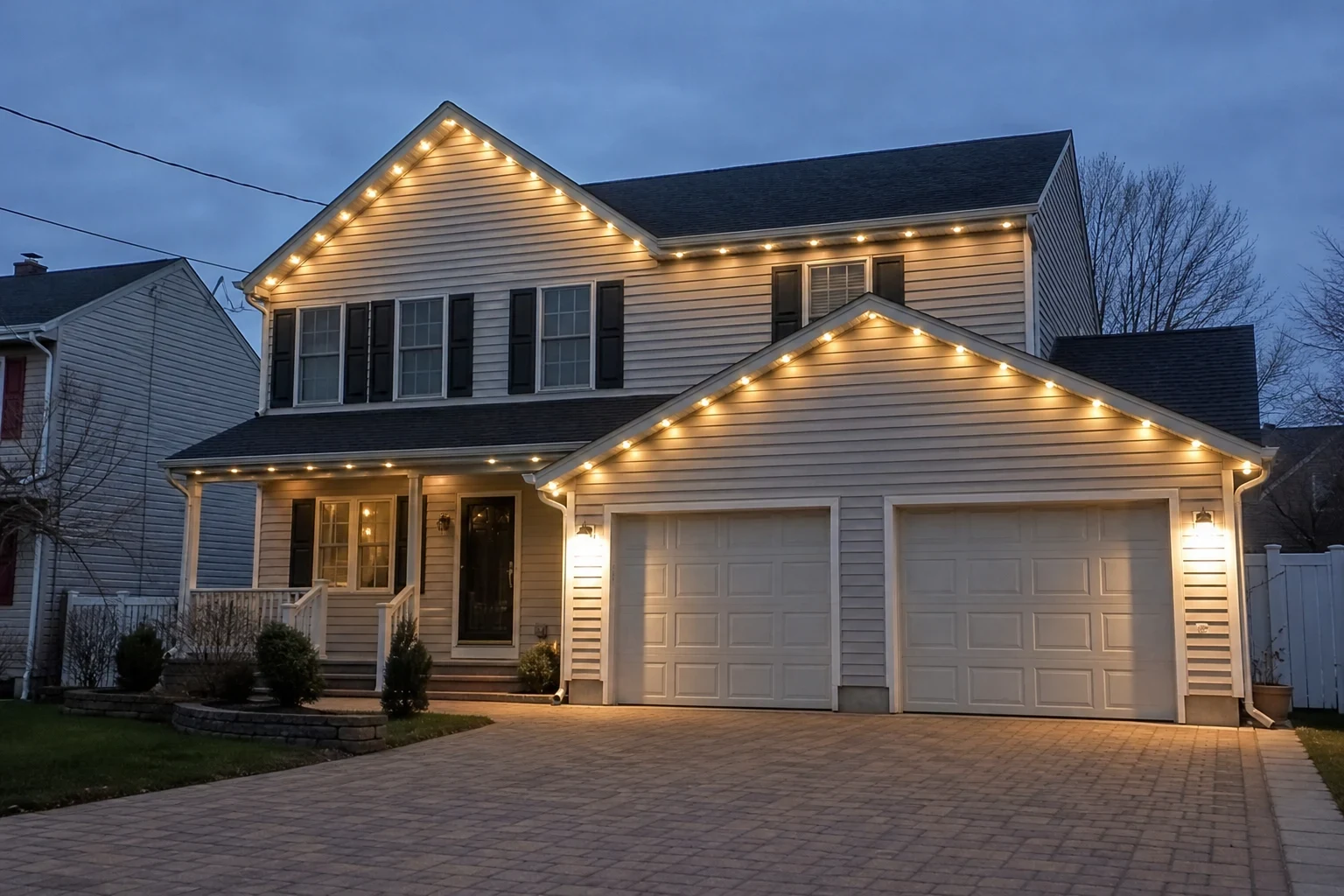
Tell us about your roofline and where you want permanent lighting. We will look at the surface in person and explain what it needs before anything is installed.