ServicesRoof Treatments
Roof Moss and Algae Treatments in Cohoes
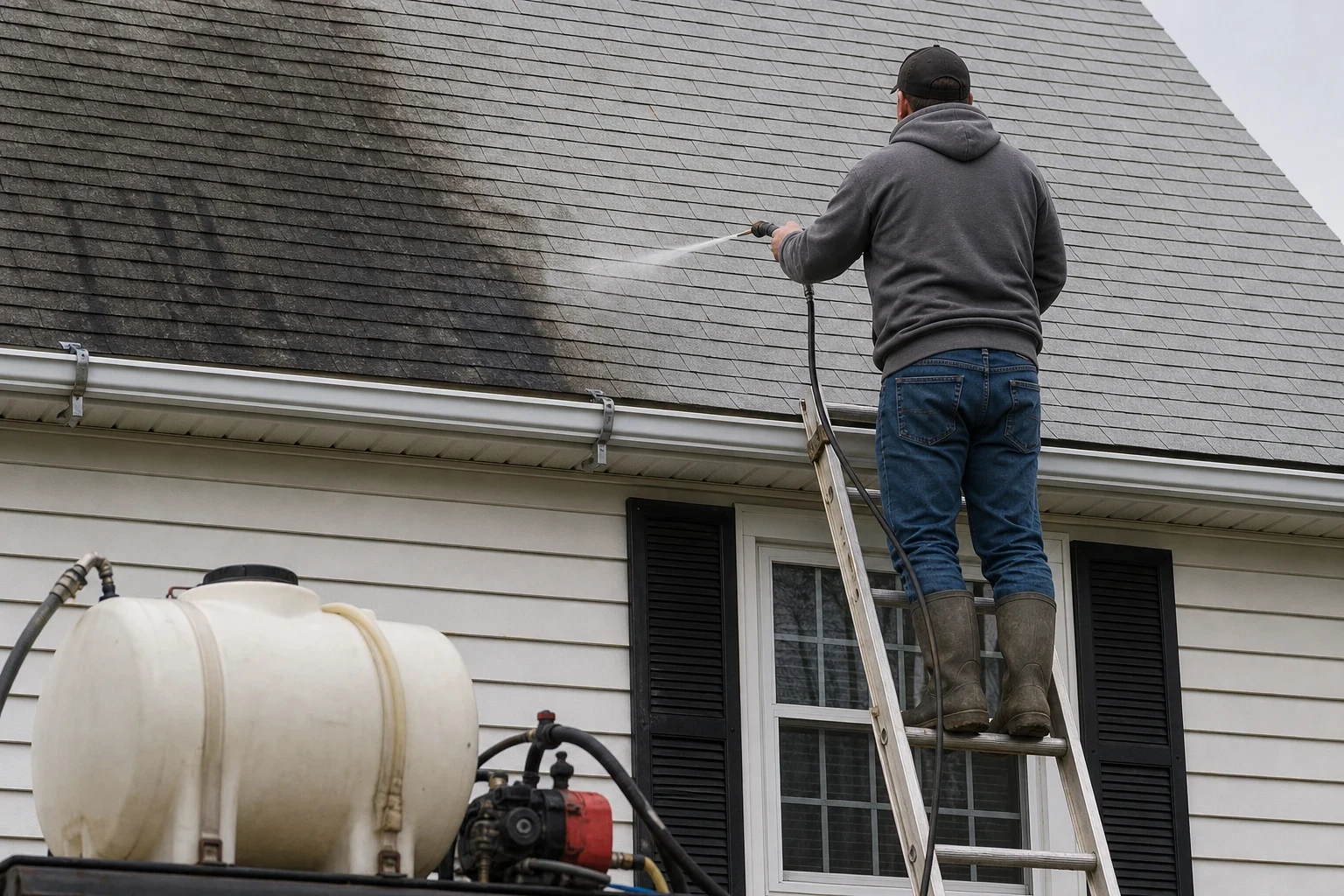
Dark streaks and moss on a roof are alive, and they wear asphalt shingles out early. Our low-pressure treatment kills algae, moss and lichen where they attach, we protect your plants during the work, and the protective granules stay on the shingles.
How a roof treatment works and when to get one
The dark streaks you see running down shingles are most often Gloeocapsa magma, a cyanobacteria that eats the limestone filler in asphalt shingles. On shaded slopes, moss and lichen move in after it. Each of them keeps moisture pressed against the shingle, and during a Capital Region winter that moisture freezes, swells and creeps under the tabs.
The treatment is a solution that kills the growth at the point where it clings. We apply it at low pressure and never use a high-pressure wand, since force strips the ceramic granules that shield the asphalt from UV and drying. Over the next few weeks the dead growth lets go and rain carries it off.
Treatment makes sense when you can see growth but the shingles are still flat and whole. If shingles are curled, cracked or missing, we photograph them and say so directly, because a treatment cannot save a roof that is already failing.
What is included in every treatment
- Slope-by-slope inspection
- We check each roof plane from the ground and the ladder before mixing anything. North-facing slopes and areas under tree cover usually need a heavier application than sunny faces.
- Plant and surface protection
- We pre-wet shrubs and beds below the drip line and cover delicate plantings. Wet leaves absorb far less runoff than dry ones.
- Low-pressure application
- The solution goes on at roughly garden-hose pressure, mixed to the strength the growth calls for. Shingles stay intact and granules stay put.
- Downspout discharge rinse
- Runoff travels through your gutters, so we flush the discharge points with fresh water to dilute what comes out at the base of each downspout.
- Photos of what we found
- You get photos of the roof surface, any lifted tabs and the flashing around chimneys and vents. That way you see the condition yourself instead of taking our word for it.
Signs your roof needs treatment
Black or dark gray streaks
Vertical streaks that start near the ridge and widen as they run down are algae colonies. They spread every season they are left alone.
Green moss along the edges
Moss tends to start at the shingle joints and along the lower courses. Its root-like rhizoids wedge under tabs and lift them.
Crusty spots that will not wash off
Lichen looks like flat gray-green or orange patches. It bonds tightly to the shingle and keeps etching the surface as it grows.
Granules collecting in the gutters
Some granule loss is normal on an older roof. A heavy layer in your gutters next to visible growth means the surface is wearing faster than it should.
What moves the price of a roof treatment
Every roof is priced from what we see on it, and the estimate lists each item so nothing is a surprise. Two homes of the same size can land at different numbers because of steepness, shade and how long the growth has been there.
Roof size and steepness
A bigger roof takes more solution and more hours of application. A steep slope adds harness and anchor setup, and every pass across it goes slower.
How established the growth is
Light algae streaking takes one even application. Thick moss mats on a shaded slope often need a stronger mix and a second pass.
Access and stories
A ranch with open yard space is quicker than a three-story home with tight side setbacks or a deck below the eaves.
Landscaping below the drip line
Dense beds and delicate plantings take longer to wet down, cover and rinse again afterward.
What happens on treatment day
- 1
Phone quote, then a visit
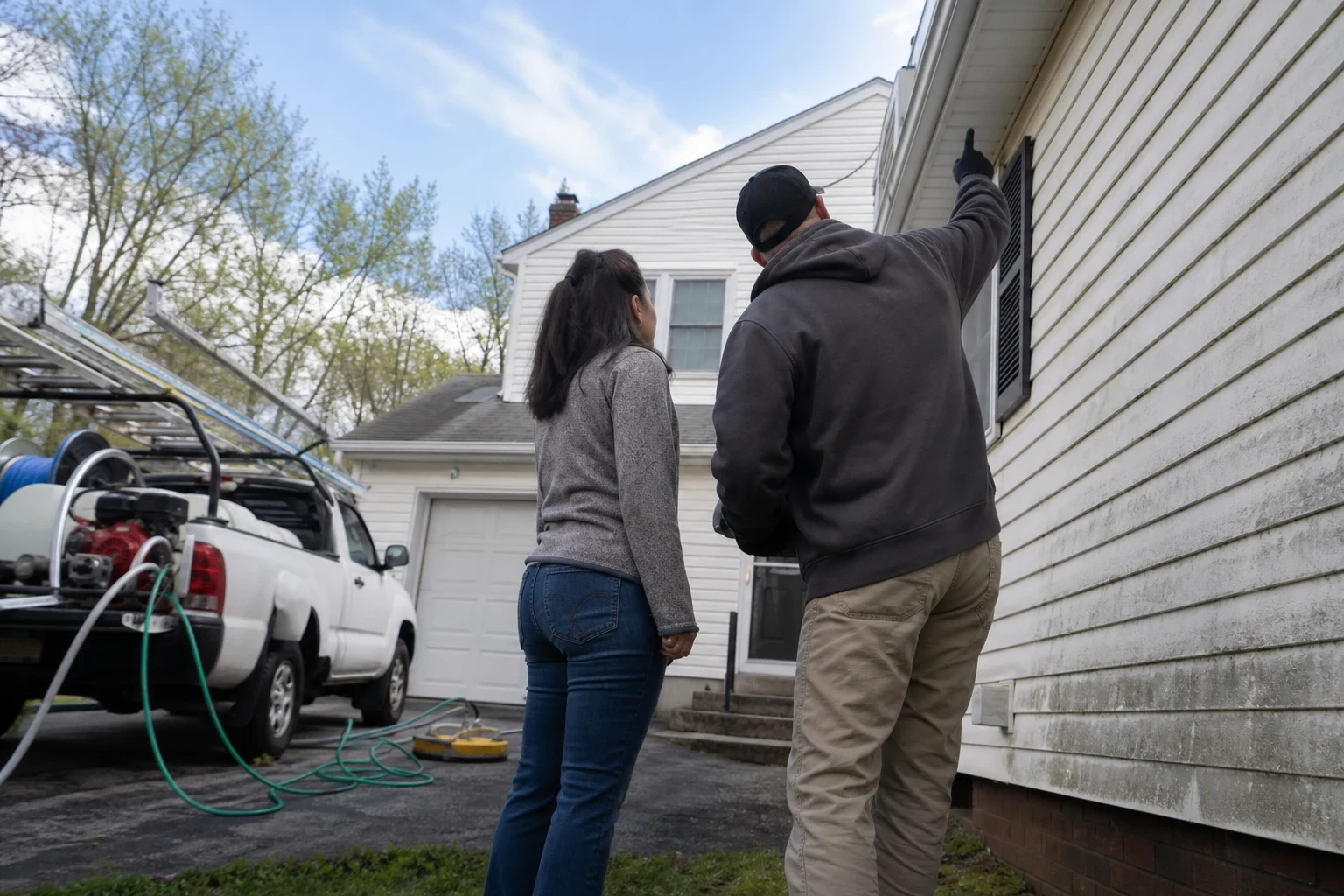
When you call, we ask how big and steep the roof is and what you have noticed, then book a time to see it. A written estimate comes before anything is scheduled.
- 2
Ladders and plant protection
Ladders go up with standoffs so their weight rests on the roof and not the gutters. We soak and cover plants and clear anything sitting under the eaves.
- 3
Ridge-to-eave application
Each slope is treated from the ridge down to the eaves so the solution sits evenly on the growth. The thickest moss gets a second pass.
- 4
Final rinse and review
We rinse the plantings again, look over each downspout discharge area and go through the photos with you. The streaks usually fade over the following rains.
Questions about treating a roof
Is the treatment bad for my lawn or shrubs?
Handled with care, it is not. We soak plants beforehand so they take in less, cover the delicate ones and rinse them once more at the end. Runoff at every downspout gets diluted too.
Can it harm asphalt shingles?
Not when the solution is mixed correctly and sprayed at low pressure. The harm people hear about comes from pressure washing, which knocks off granules and can void a shingle warranty. We never aim a pressure wand at a roof.
When will the streaks go away?
The growth is dead within a day, yet the stains and dead moss fade slowly. Most of the difference shows over several weeks of ordinary rain, and the toughest moss is the last to loosen.
How often should a roof be treated?
That comes down to sun and shade. A roof in full sun can stay clean for years, while a north slope beneath maples or oaks grows back faster. We give you our honest expectation for your own roof.
Is it better to treat the roof before permanent lighting goes up?
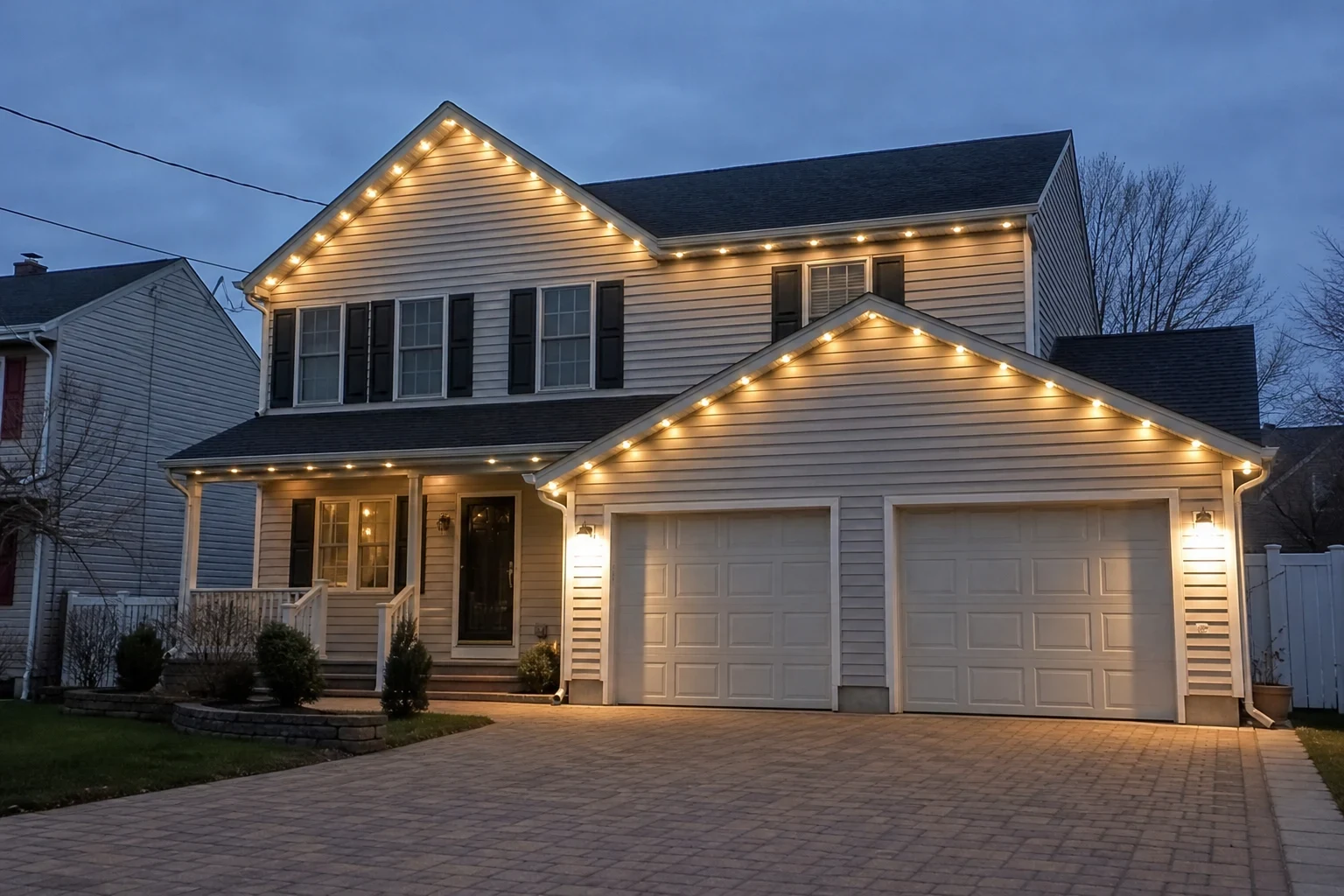
That order works well. We are an authorized Gemstone Lights installer and mount track along the roofline and soffit, so beginning with a treated roof edge keeps growth from spreading behind the channel later. One call can cover a quote for both.
Is your crew insured for roof work?
Yes. We are licensed and insured, and we are happy to explain what that coverage includes when we visit to look at your roof. Every job includes proper ladder setup and roof safety gear.
Find out what is growing on your roof
Tell us about your roof and the streaks or moss you are seeing. We will look at every slope, photograph what we find and give you a written estimate. We work in Cohoes and nearby towns like Troy, Latham and Clifton Park.